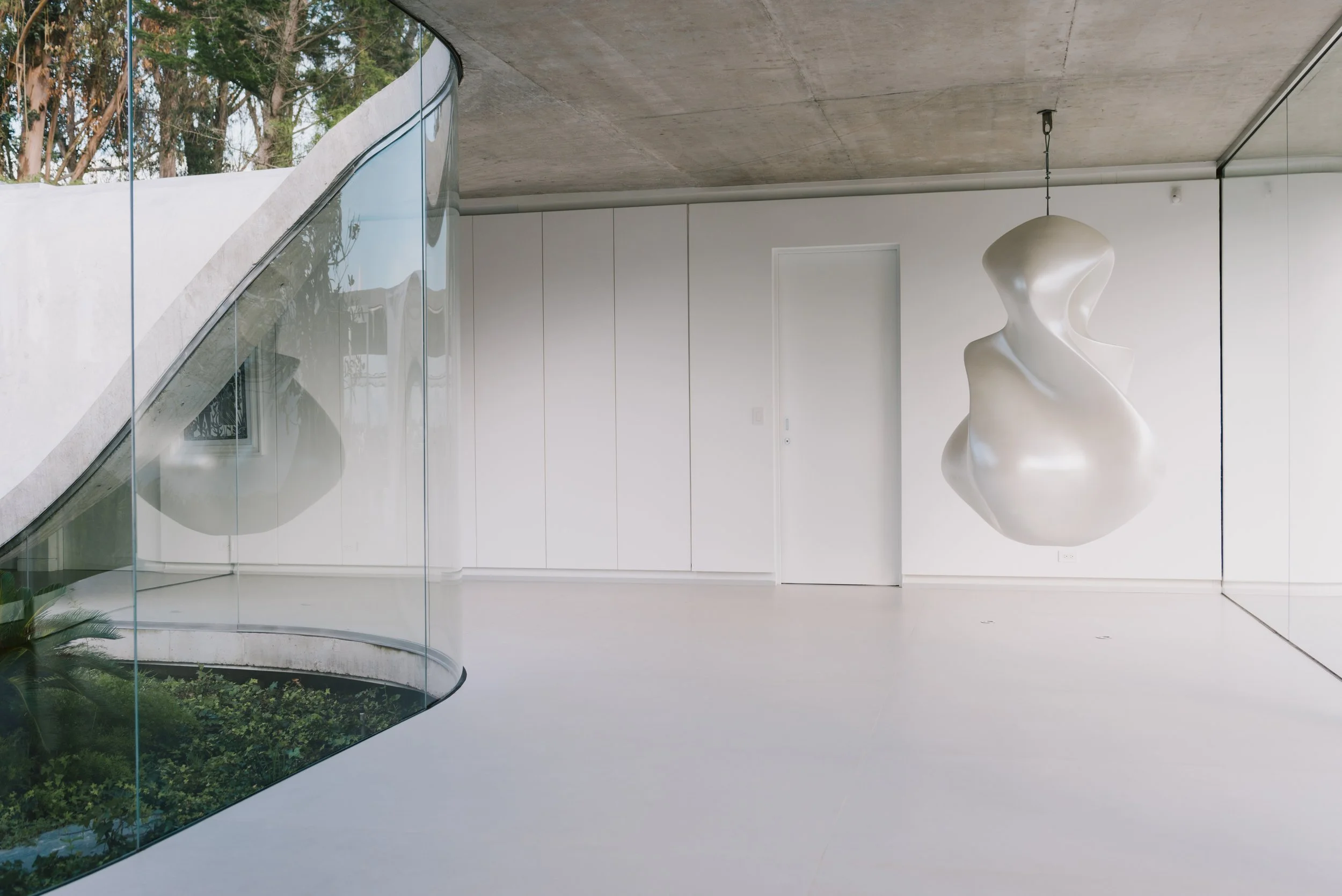
Estudio Felipe Escudero (EFE) works at the intersection of architecture, art, and design, developing projects that operate simultaneously as spatial systems and cultural statements. Founded to explore architecture beyond typology, the studio treats buildings, interiors, and sculptural objects as instruments that shape behavior, memory and collective experience with the main goal to improve human well-being. Across all typologies, EFE treats space not only as a functional construct, but as a cultural medium. Each project is conceived as a complete world: performance, emotion, and meaning coexist with intention to provide users with moments to feel present, to connect physically and mentally to the world.
The studio operates as a practice with a strong conceptual core and a flexible international collaborative structure. Projects are developed in close dialogue with architects, engineers, artists, designers, and fabricators selected according to the ambition and specificity of each commission. EFE functions as an adaptive ecosystem rather than a fixed hierarchy, allowing it to work across scales and geographies while maintaining precision, authorship, and depth of thought.
The practice spans multiple scales and formats, approaching each as part of a single spatial language:
Cultural buildings and museums
Projects that operate as civic instruments. They are conceived as spaces for knowledge, memory, and public ritual, where architecture becomes a framework for collective identity and long-term cultural relevance.
Architectural projects
Residential, mixed-use, and institutional buildings designed as highly performing systems. These projects balance structural clarity, environmental logic, and spatial experience, understanding scale as an opportunity to organize life and movement with precision.
Urban planning and territorial strategies
Planning projects are treated as living systems that shape behavior, social interaction, and collective memory. They operate simultaneously as functional infrastructures and cultural frameworks that define how cities evolve over time.
Interior Design
Interiors are approached as micro-architectures. Extreme attention to detail, materiality, and atmosphere allows spaces to feel intimate, immersive, and dreamlike, while maintaining architectural rigor.
Fine Art and site-specific works
Objects are developed as conceptual tools: small-scale experiments in material, perception, and form that inform the larger architectural work. They function as laboratories where ideas are tested freely and intuitively.